The Regulation Shift Model describes how development unfolds across individuals, relationships, and systems. Rather than focusing on behavior alone, it centers the conditions that shape regulation and the capacities that grow from it over time.
Environment → Regulation → Capacity → Learning
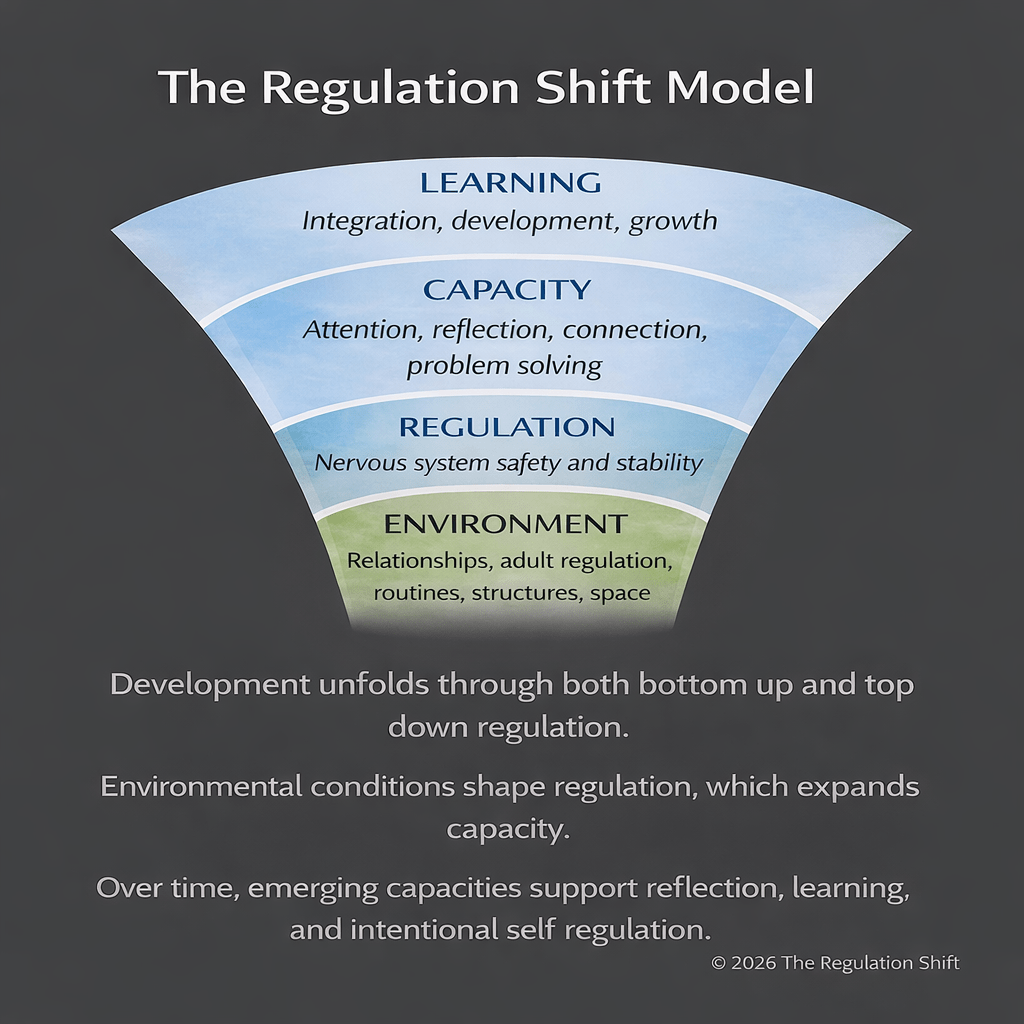
Environment shapes regulation
Development begins with environmental conditions.
Environments include:
• relational climate
• adult nervous systems
• expectations and norms
• routines and rhythms
• policies and structures
• physical space
These conditions shape whether nervous systems experience safety or threat.
Environment → Regulation.
Regulation enables capacity
When nervous systems move into survival states:
• attention narrows
• reflection shuts down
• learning stops
Regulation is what allows people to access:
• thinking
• connection
• problem solving
• learning
No regulation → no capacity.
Capacity expands through connection
Once regulation exists, relationships expand capacity.
Safety and connection allow people to:
• integrate experiences
• build resilience
• develop understanding
Connection is not just supportive. It’s the developmental mechanism.
Compliance isn’t development
This is where systems often go wrong.
Quiet behavior doesn’t equal:
• regulation
• understanding
• integration
Surface order may reflect control, not growth. Development requires internal capacity, not just outward behavior.
Regulation spreads through relationships
Self regulation does not emerge in isolation.
It develops through co-regulation across relationships and over time.
This happens across:
• parent child relationships
• educator student relationships
• leadership teams
• organizational cultures
Regulation is relational and contagious within systems.
 The Regulation Shift