Changing the conditions that shape how people work, experience, learn, and grow.
Every organization operates within a complex network of people, relationships, expectations, environments, and systems.
Sometimes the most meaningful opportunities for change emerge not from adding another initiative or strategy, but from examining the conditions that influence how people experience their work and engage with one another.
The Regulation Shift™ offers collaborative partnerships that bring research, professional experience, systems thinking, and a fresh perspective to organizational challenges and opportunities.
Partnerships are shaped around each organization’s context, priorities, and goals, with an emphasis on developing practical approaches that strengthen both human capacity and organizational effectiveness.
WHO PARTNERSHIPS ARE FOR
The Regulation Shift™ partners with organizational and executive leaders, leadership teams, legal professionals, educational systems, health and human service organizations, professional associations, community organizations, and interdisciplinary teams. Engagements may focus on an internal organizational challenge, leadership development, professional education, policy and practice development, implementation, or a shared area of inquiry.
WHAT A PARTNERSHIP MAY INCLUDE
Organizational partnerships are designed around the needs, interests, and priorities of each organization.
Depending on the context, a partnership may involve one or more areas of collaborative work, with activities and deliverables developed to support meaningful and sustainable progress.
WHEN A PARTNERSHIP MAY HELP
An organizational or systems partnership may be useful when:
• Sustained pressure or chronic overload is affecting the workforce
• Leaders are struggling to balance performance, relationships, and capacity
• Communication difficulties or relational patterns are disrupting collaboration
• Teams are working across fragmented roles, priorities, or systems
• An important initiative has stalled despite continued effort
• Organizational change has created uncertainty, disconnection, or competing demands
• Individual employees are being treated as the problem when workplace conditions may also be contributing
• Existing professional learning has not produced meaningful or lasting change
• Policies or procedures are not producing the outcomes they were intended to support
• An organization needs a clearer understanding of how conditions affect functioning and performance
WAYS TO COLLABORATE
Collaboration can take many forms, from focused consultation and professional learning to sustained organizational partnerships.
The structure, scope, and duration of an engagement depend on the nature of the work, the organization’s goals, and the level of support needed.
Opportunities may include focused projects, ongoing consultation, collaborative planning, professional development, or longer term initiatives that evolve as new priorities and possibilities emerge.
A partnership may include:
• Strategic consultation with organizational leaders
• Facilitated leadership or team sessions
• Assessment of conditions affecting regulation, capacity, and functioning
• Leadership consultation during periods of pressure or change
• Systems, workflow, and organizational friction mapping
• Policy and practice review or development
• Consultation on communication and relational dynamics
• Organizational learning experiences
• Professional education for legal, educational, clinical, and community audiences
• Interdisciplinary workshops and presentations
• Development of practical frameworks, tools, or resources
• Consultation on implementation and systems change
• Ongoing advisory support
The work may involve one focused phase or a longer collaboration with multiple components.
PROFESSIONAL AND INTERDISCIPLINARY COLLABORATION
The Regulation Shift™ also collaborates with educators, researchers, clinicians, consultants, organizational leaders, and other professionals whose work intersects with learning, regulation, relationships, leadership, and organizational functioning.
Collaborations may include shared projects, professional learning, applied research, resource development, and initiatives that benefit from multiple areas of expertise.
The emphasis is on bringing complementary perspectives together to examine complex questions, develop useful approaches, and create opportunities for meaningful change.
Collaborative work may include:
• Professional education and training
• Workshops and presentations
• Policy and practice consultation
• Development of resources or practical tools
• Translation of research into professional practice
• Interdisciplinary consultation
• Joint exploration of emerging professional or organizational challenges
These collaborations are designed around the expertise each professional brings and the needs of the intended audience.
WHAT YOUR ORGANIZATION CAN GAIN
Depending on the focus of the engagement, an organizational partnership may support:
- Clearer understanding of the conditions influencing people and performance
- Greater alignment between organizational priorities, expectations, and everyday practices
- More thoughtful approaches to complex challenges and decisions
- Stronger professional capacity, collaboration, and shared understanding
- Practical opportunities for improvement and sustainable change
PARTNERSHIP OR WORKSHOP?
The appropriate format depends on the question, challenge, or opportunity being explored.
A workshop may be useful when the goal is to introduce ideas, build shared understanding, or support focused professional learning.
An organizational partnership provides opportunities for deeper exploration, ongoing collaboration, and practical application over time.
For organizations uncertain about which approach would be most useful, an initial conversation can help clarify priorities and identify possible next steps.
Investment
Organizational partnerships are individually scoped and priced according to the organization’s needs, duration, audience, and deliverables.
Following an initial conversation, a written proposal will outline the recommended scope, timeline, investment, and expected outcomes.
START A CONVERSATION
Organizational partnerships begin with a conversation about the work, the people involved, the conditions shaping the current situation, and the possibilities worth exploring.
Whether the need is clearly defined or still taking shape, an initial conversation can help identify opportunities for collaboration and determine an appropriate path forward.
Not sure which option is the right fit?
Request a complimentary fit call to briefly share what you’re looking for and determine the best next step.
CLICK HERE FOR A COMPLIMENTARY FIT CALL
FEATURED WORK
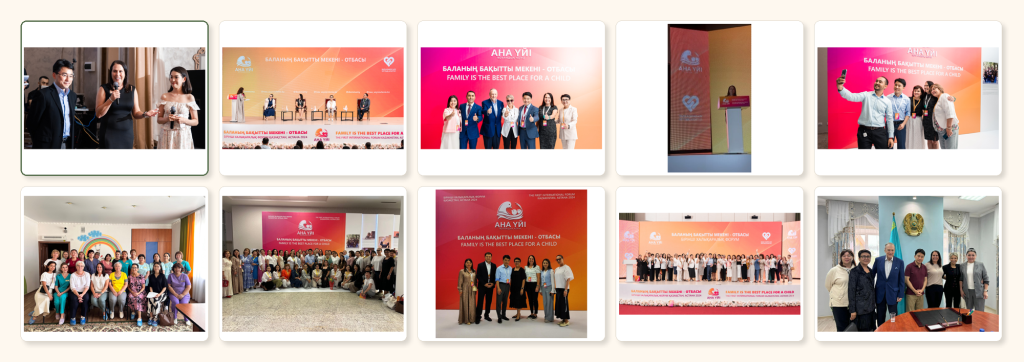
International Forum (master classes, field-based observation, consultation and learning, panel participation): Developed and facilitated customized master classes and field-based learning experiences for professionals working in orphanages and mother and baby homes in Kazakhstan, translating developmental, relational, and regulation informed concepts for a specific cultural and professional context and need.